Onome Amuge
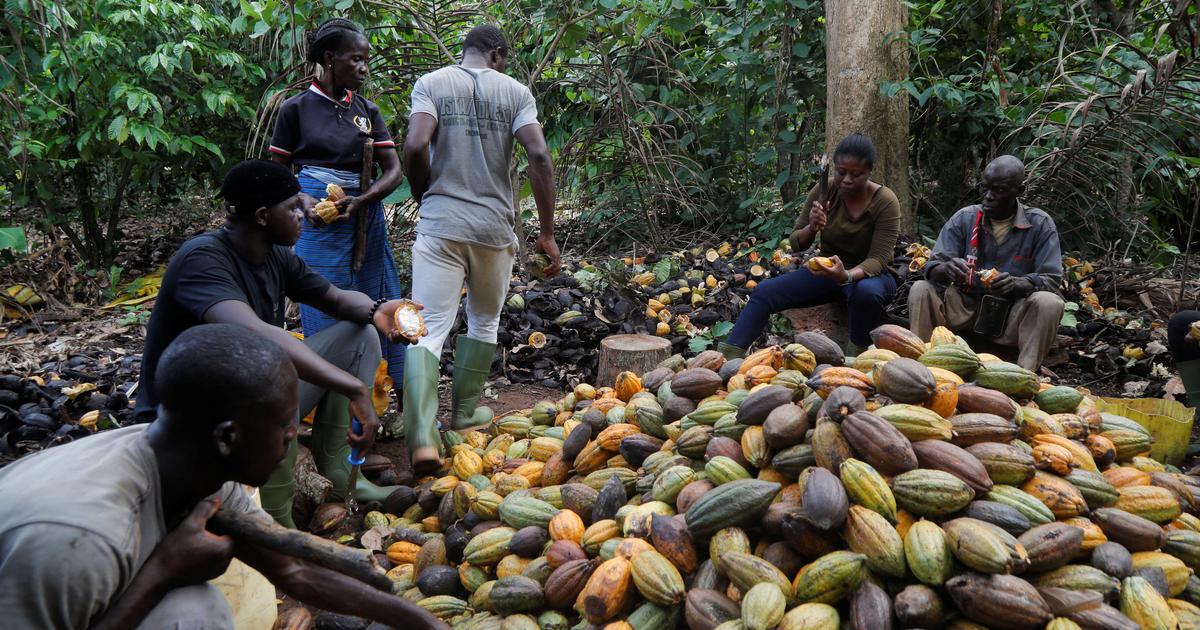
Africa, the world’s undisputed leader in cocoa production, could lose its global dominance within a decade if structural weaknesses in the region’s cocoa ecosystem remain unaddressed, the head of the continent’s leading farmers’ alliance has warned.
Adeola Adegoke, global president of the Cocoa Farmers Alliance Association of Africa (COFAAA), issued the caution at the 2025 African Cocoa Summit and Awards held recently in Accra, Ghana. The event, themed “Building a Sustainable African Cocoa Ecosystem: Unlocking Economic Potentials, Driving Inclusive Growth,” brought together policymakers, processors, traders, and farmer cooperatives amid growing unease over Africa’s declining share of value in the global chocolate economy.
“We may soon wake up to a world where Africa is no longer the cocoa capital of the world. Our farmers are leaving the fields, our soils are degrading, and our policies are lagging behind global realities,” Adegoke warned.
A $130bn industry with a $6 problem
Cocoa is the lifeblood of several African economies. Côte d’Ivoire, Ghana, Nigeria, and Cameroon collectively supply about 70 per cent of global cocoa, feeding a chocolate industry worth more than $130 billion annually. Yet African farmers earn less than six per cent of that revenue, a fraction that has barely improved in decades.
Despite rising global demand for sustainable and ethically sourced cocoa, the average farmer in West Africa earns less than $2 a day, well below the poverty line. Adegoke argued that this chronic inequity threatens both livelihoods and the continent’s competitiveness.
“We are producing the wealth that drives a global industry, yet our farmers live without basic amenities; no good roads, no access to clean water, no electricity. This is not just an economic issue; it is a moral one,” he said.
The warning comes as cocoa-growing communities face mounting environmental stress. Rising temperatures, erratic rainfall, and soil degradation have already reduced yields in major producing countries. Adding to the crisis, illegal gold mining, known locally as ‘galamsey’ in Ghana or ‘zamfara mining’ in Nigeria, is encroaching on fertile cocoa lands, destroying farms and polluting rivers with toxic chemicals.
Satellite data from environmental groups indicate that West Africa lost more than 80,000 hectares of cocoa-producing forest land in 2024 alone, much of it to mining and unsustainable expansion.
“Illegal mining is not just stealing our land; it is destroying the ecological base that sustains cocoa farming. Farmers cannot compete with the quick cash that mining promises, even though it leaves behind poisoned soil and dead rivers,” Adegoke said.
The cost of underinvestment
Beyond environmental and social pressures, analysts say decades of underinvestment in rural infrastructure and limited access to finance have eroded Africa’s comparative advantage in cocoa. Despite being the primary global producer, the continent captures only a sliver of value because most cocoa beans are exported raw to Europe and Asia for processing.
According to COFAAA, less than 15 per cent of Africa’s cocoa is processed locally, compared with nearly 90 per cent in Europe. Processing capacity in Nigeria, Ghana, and Côte d’Ivoire has stagnated in recent years amid energy shortages, currency volatility, and inconsistent policy regimes.
Adegoke believes that only local value addition and domestic consumption can secure the continent’s future in cocoa.
“Africa has never been taught to consume chocolate. It is ironic that a farmer who has cultivated cocoa for 40 years has never tasted chocolate. That disconnect reflects how little value we retain from our own labour,” he said.
Value addition and the politics of pricing
In Ghana and Côte d’Ivoire, government-controlled marketing boards set cocoa prices to protect farmers from volatility. However, Adegoke and other farmer leaders argue that such pricing mechanisms have not kept pace with inflation or rising production costs.
International prices for cocoa have surged to record highs in 2025, topping $5,500 per tonne earlier this year, the highest in nearly half a century, driven by supply shortages and weather disruptions. Yet farmers’ incomes have not seen a proportional increase.
“Farmers see prices rise on the news, but not in their pocket. Without a transparent and fair pricing system that ensures farmers earn a living income, sustainability will remain a slogan,” said Nana Yaw Reuben Jnr, COFAAA’s country director for Ghana. “
Yaw also criticised the persistent marginalisation of African farmers in global cocoa dialogues, many of which, he noted, still take place in European capitals.
“Europe does not grow cocoa. Every bean is sourced from African soil. Yet decisions about our livelihoods are made thousands of miles away. We must reclaim that narrative,” he said.
Global reordering in the cocoa trade
The urgency of reform is compounded by shifting global dynamics. Latin American producers, particularly Ecuador, Peru, and Brazil, are expanding cocoa output, investing in quality certification and traceability that appeal to premium chocolate makers.
Ecuador’s exports grew by more than 25 per cent in 2024, making it the world’s third-largest cocoa producer. Meanwhile, African production has been disrupted by ageing trees, disease, and declining youth participation in farming.
“Other regions are modernising while we are stuck fighting fires. If we do not fix the fundamentals including pricing, land rights, replanting, and governance, Africa could lose its leadership by 2035,” Adegoke said.
A new model for sustainability
The Accra summit, jointly organised by COFAAA and the Cocoa Roundtable Initiative (CORI), convened representatives from the International Cocoa Organization, major chocolate manufacturers, and African agriculture ministries. Discussions focused on building an Africa-led sustainability model that goes beyond donor projects and certification schemes.
Key proposals included:
- Establishing an African Cocoa Development Fund to finance replanting and cooperative infrastructure.
- Adopting traceability systems owned by African regulators to meet EU deforestation-free import standards.
- Promoting domestic chocolate consumption through school feeding programmes and public-private marketing campaigns.
- Expanding women and youth participation in the cocoa value chain.
Stakeholders agreed that the future of cocoa depends not only on production volumes but on resilience, inclusivity, and fairness.
The way forward: From beans to brands
Analysts argue that Africa’s long-term competitiveness will hinge on moving from beans to brands, producing finished cocoa-based goods rather than exporting raw materials. Nigeria, Ghana, and Côte d’Ivoire have made tentative steps in this direction, but progress remains slow.
In Nigeria, the central bank’s export diversification plan lists cocoa processing as a priority sector, while Ghana’s COCOBOD has launched initiatives to supply local chocolatiers with low-cost inputs. Yet bureaucratic bottlenecks, inconsistent power supply, and high logistics costs continue to stifle investment.
“Africa must see cocoa not as a crop, but as an industry. From the soil to the supermarket shelf, every stage must create value for Africans,” Adegoke insisted.
The summit ended with a renewed call for collective responsibility among governments, international buyers, and financial institutions. Delegates urged African states to harmonise policies, reduce export taxes on semi-processed cocoa, and enforce environmental safeguards to meet global sustainability standards.
Adegoke said COFAAA will establish a monitoring framework to track implementation of commitments made at the summit, including benchmarks on farmer incomes and reforestation.
“This is not just about protecting a commodity. It is about protecting a heritage and securing the livelihoods of millions. Cocoa has been good to Africa. Now, Africa must be good to cocoa,” he added.