Business A.M
No Result
View All Result
Thursday, March 5, 2026
  • Login
  • Home
  • Technology
  • Finance
  • Comments
  • Companies
  • Commodities
  • About Us
  • Contact Us
Subscribe
Business A.M
  • Home
  • Technology
  • Finance
  • Comments
  • Companies
  • Commodities
  • About Us
  • Contact Us
No Result
View All Result
Business A.M
No Result
View All Result
Home Frontpage

Higher oil output, reduced imports sustain Nigeria’s current account surplus in Q2 at 0.4% of GDP

by Admin
October 30, 2017
in Frontpage
Emefiele ringing the opening bell last Friday, 27th October, at the London Stock Exchange
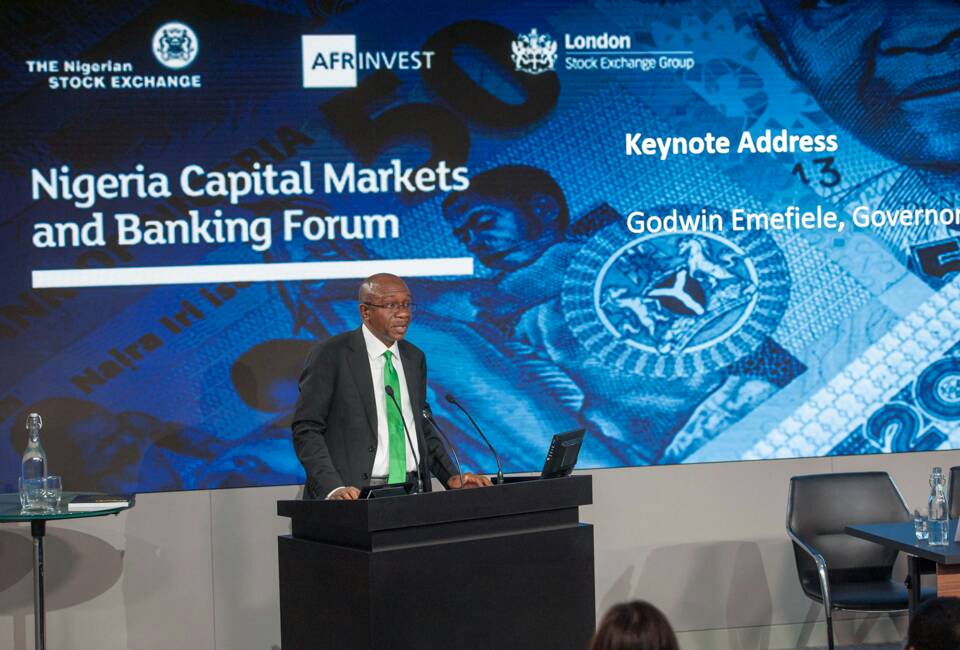
Emefiele Addressing investors at the London Stock exchange

Nigeria recorded a current account (CA) surplus of 0.4 percent of GDP in Q2 2017, representing improvements for the third consecutive quarter, according to estimates by analysts at Renaissance Capital in an update note published Monday, October 30, 2017 seen by Bussinessamlive.

The Q2 2017 CA surplus, an improvement from a deficit of 0.4 percent of GDP a year earlier, is however less that the 1.1 percent recorded in Q1 2017, representing a 63.6 percent drop quarter-on-quarter.

The RenCap analysts attributed the sustained CA surplus to higher oil production, an increase in current transfers and a decline in imports.

They said due to the restoration of a trade surplus, on the back of rising export revenue and subdued imports, current transfers – mainly made up of remittances and the biggest source of inflows after exports – saw a strong 25 percent year-on-year increase in Q2 2017 to $5.4 billion against a 16 percent contraction in Q2 2016.

This according to them helped mitigate the 70 percent year-on-year increase in net service payments to $3.3 billion.

Nigeria’s export revenue increased by 17 percent year-on-year to $10.8 billion in 2Q17, compared to a 29 percent year-on-year decline a year earlier. This improvement was in part due to a recovery in oil production to an average of 1.86Mb/d in Q2 2017, from 1.60Mb/d in Q3 2016, which is the lowest production in this analyst’s Q206-Q217 data series.

The pick-up in production in Q2 2017 was mainly due to production of about 200,000 b/d from the TransForcados pipeline coming back online in June following repair work, and the tripling of the budget for the amnesty programme for Niger Delta militants.

The analysts also identified reduced imports as another reason for the improved CA surplus in the review period. Specifically, they noted that imports fell 22 percent year-on-year to $8.7 billion in Q2 2017, compared to 15 percent year-on-year decline a year earlier.

“Imports have been falling – in year-on-year terms – for nine consecutive quarters,” they noted, saying the decline is due to a combination of FX restrictions – including the de facto ban on 41 imports – and a sharply weaker naira in the FX markets where households and businesses could access FX, such as the black market.

“Imports are showing a moderate recovery after bottoming in Q416/Q117. We think this pick-up is mainly due to improved FX availability and less to strengthening demand,” they noted, forecasting a smaller CA surplus of 1.8 percent of GDP in 2018 vs 2.4 percent estimates in 2017.

A moderate import recovery implies smaller 2018 CA surplus, they opined adding that the recovery in oil production has arguably helped improve consumer confidence.

“While we expect Q3 2017 CA data to show a bounce, as oil production bottomed a year earlier, we see limited upside in export revenue in 2018. This because we expect oil production to stabilise at the levels it recovered to in 2017 (1.9Mb/d in 2Q17) and for the price to also stabilise at c. $55/bl,” they said.

On the import front, the analysts expect the pick-up to be tempered by a consumer that remains challenged.

“We think inflation is likely to remain in the low double-digits in 2018, which is negative for real wages. We also do not expect a meaningful wage increase from the government, despite the forthcoming 2019 elections, because it is revenue constrained,” they pointed out, adding that the last time the Federal Government imposed a significant wage increase was ahead of the 2011 elections, when the oil price was still lofty.


Admin
Admin
Previous Post

Nigerian banks lose 8.7% deposits to treasury bills in 12 months as depositors switch investments

Next Post

Tech firms must do more on extremism, World Economic Forum warns

Next Post

Tech firms must do more on extremism, World Economic Forum warns

  • Trending
  • Comments
  • Latest
Igbobi alumni raise over N1bn in one week as private capital fills education gap

Igbobi alumni raise over N1bn in one week as private capital fills education gap

February 11, 2026

Glo, Dangote, Airtel, 7 others prequalified to bid for 9Mobile acquisition

November 20, 2017

How UNESCO got it wrong in Africa

May 30, 2017

CBN to issue N1.5bn loan for youth led agric expansion in Plateau

July 29, 2025

6 MLB teams that could use upgrades at the trade deadline

Top NFL Draft picks react to their Madden NFL 16 ratings

Paul Pierce said there was ‘no way’ he could play for Lakers

Arian Foster agrees to buy books for a fan after he asked on Twitter

Nigeria’s new tax laws could create the world’s first AI-native tax system

Nigeria’s new tax laws could create the world’s first AI-native tax system

March 4, 2026
Nigerian Exchange breaks N91trn mark as equities rally

NGX snaps rally as N101.9bn wipeout hits market cap

March 4, 2026
Oil market weighs softer U.S. demand against rising OPEC supply outlook

Oil rally pauses as U.S. jobs data offsets Hormuz war risk

March 4, 2026
Gas supply disruption to OML 18 cuts power supply across 9 Abia LGAs

Gas supply disruption to OML 18 cuts power supply across 9 Abia LGAs

March 4, 2026

Popular News

  • Igbobi alumni raise over N1bn in one week as private capital fills education gap

    Igbobi alumni raise over N1bn in one week as private capital fills education gap

    0 shares
    Share 0 Tweet 0
  • Glo, Dangote, Airtel, 7 others prequalified to bid for 9Mobile acquisition

    0 shares
    Share 0 Tweet 0
  • How UNESCO got it wrong in Africa

    0 shares
    Share 0 Tweet 0
  • CBN to issue N1.5bn loan for youth led agric expansion in Plateau

    0 shares
    Share 0 Tweet 0
  • What’s Behind the Fourth-Quarter Earnings Dip?

    0 shares
    Share 0 Tweet 0
Currently Playing

CNN on Nigeria Aviation

CNN on Nigeria Aviation

Business AM TV

Edeme Kelikume Interview With Business AM TV

Business AM TV

Business A M 2021 Mutual Funds Outlook And Award Promo Video

Business AM TV

Recent News

Nigeria’s new tax laws could create the world’s first AI-native tax system

Nigeria’s new tax laws could create the world’s first AI-native tax system

March 4, 2026
Nigerian Exchange breaks N91trn mark as equities rally

NGX snaps rally as N101.9bn wipeout hits market cap

March 4, 2026

Categories

  • Frontpage
  • Analyst Insight
  • Business AM TV
  • Comments
  • Commodities
  • Finance
  • Markets
  • Technology
  • The Business Traveller & Hospitality
  • World Business & Economy

Site Navigation

  • Home
  • About Us
  • Contact Us
  • Privacy & Policy
Business A.M

BusinessAMLive (businessamlive.com) is a leading online business news and information platform focused on providing timely, insightful and comprehensive coverage of economic, financial, and business developments in Nigeria, Africa and around the world.

© 2026 Business A.M

Welcome Back!

Login to your account below

Forgotten Password?

Retrieve your password

Please enter your username or email address to reset your password.

Log In
No Result
View All Result
  • Home
  • Technology
  • Finance
  • Comments
  • Companies
  • Commodities
  • About Us
  • Contact Us

© 2026 Business A.M