Business A.M
No Result
View All Result
Tuesday, February 17, 2026
  • Login
  • Home
  • Technology
  • Finance
  • Comments
  • Companies
  • Commodities
  • About Us
  • Contact Us
Subscribe
Business A.M
  • Home
  • Technology
  • Finance
  • Comments
  • Companies
  • Commodities
  • About Us
  • Contact Us
No Result
View All Result
Business A.M
No Result
View All Result
Home Global market

Climate Change to cost $2,400bn economic losses globally by 2030 – ILO

by Admin
July 4, 2019
in Global market, WORLD BUSINESS & ECONOMY

By Tola Akinmutimi


….identifies Nigeria, other West African countries as most vulnerable

The International Labour Organisation (ILO) on Thursday projected that increase in heat stress resulting from global warming could lead to global equivalent of US$2,400 billion economic losses or 80 million jobs by the year 2030.
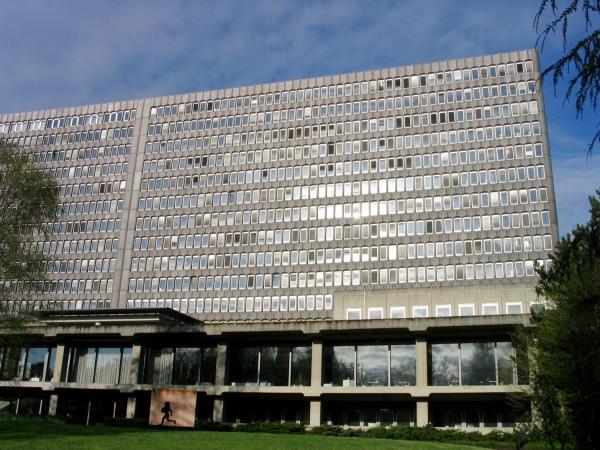
The global labour organization gave this prediction in its new report titled ‘Working on a Warmer Planet: The Impact of Heat Stress on Labour Productivity and Decent Work’.

It hinged the projections on a global temperature rise of 1.5°C by the end of this century which suggested that in 2030, 2.2 per cent of total working hours worldwide would be lost because of higher temperatures, a loss equivalent to 80 million full-time jobs.

The ILO cautioned that these figures were a conservative estimate because the report assumed that the global mean temperature rise will not exceed 1.5°C and that work in agriculture and construction – two of the sectors worst affected by heat stress – are carried out in the shade.

The report draws on climate, physiological and employment data and presented the estimates of the current and projected productivity losses at national, regional and global levels

The report clarified further: “Heat stress refers to heat in excess of what the body can tolerate without suffering physiological impairment. It generally occurs at temperatures above 35°C, in high humidity. Excess heat during work is an occupational health risk; it restricts workers’ physical functions and capabilities, work capacity and thus, productivity. In extreme cases it can lead to heatstroke, which can be fatal.

“The sector expected to be worst affected, globally, is agriculture. 940 million people around the world work in the agricultural sector. It is projected to account for 60 per cent of global working hours lost due to heat stress by the year 2030. The construction sector will also be severely impacted with an estimated 19 per cent of global working hours lost by the same date. Other sectors especially at risk are environmental goods and services, refuse collection, emergency, repair work, transport, tourism, sports and some forms of industrial work”, it added.

The new report also stated that the impact of heat would be unequally distributed around the world, identifying the regions losing the most working hours as Southern Asia and Western Africa, where approximately 5 per cent of working hours are expected to be lost in 2030, corresponding to around 43 million and 9 million jobs, respectively.

Commenting on the report, Catherine Saget, chief of unit in the ILO’s research department and one of the main authors of the report said: “The impact of heat stress on labour productivity is a serious consequence of climate change… We can expect to see more inequality between low and high income countries and worsening working conditions for the most vulnerable.

“The impact of heat stress on labour productivity is a serious consequence of climate change, which adds to other adverse impacts such as changing rain patterns, raising sea levels and loss of biodiversity.

“In addition to the massive economic costs of heat stress, we can expect to see more inequality between low and high income countries and worsening working conditions for the most vulnerable, as well as displacement of people. To adapt to this new reality appropriate measures by governments, employers and workers, focusing on protecting the most vulnerable, are urgently needed”, she added.

Heat stress will affect millions of women who make up the majority of workers in subsistence agriculture, as well as men who dominate the construction industry. The social consequences of heat stress may include increasing migration, as workers leave rural areas to look for better prospects.

The report calls for greater efforts to design, finance and implement national policies to address heat stress risks and protect workers.

These include adequate infrastructure and improved early warning systems for heat events, and improved implementation of international labour standards such as in the area of occupational safety and health to help design policies to tackle heat-related hazards.


Admin
Admin
Previous Post

Nigeria satisfies major international maritime requirement, as Buhari signs anti-piracy bill

Next Post

NNPC pays ExxonMobil Nigeria affiliate $833.57m final cash-call arrears, three years ahead of repayment plan

Next Post

NNPC pays ExxonMobil Nigeria affiliate $833.57m final cash-call arrears, three years ahead of repayment plan

  • Trending
  • Comments
  • Latest
Igbobi alumni raise over N1bn in one week as private capital fills education gap

Igbobi alumni raise over N1bn in one week as private capital fills education gap

February 11, 2026

Reps summon Ameachi, others over railway contracts, $500m China loan

July 29, 2025
NGX taps tech advancements to drive N4.63tr capital growth in H1

Insurance-fuelled rally pushes NGX to record high

August 8, 2025
SIFAX subsidiary bets on operational discipline, cargo diversification to drive recovery at Lagos terminal

SIFAX subsidiary bets on operational discipline, cargo diversification to drive recovery at Lagos terminal

February 10, 2026

6 MLB teams that could use upgrades at the trade deadline

Top NFL Draft picks react to their Madden NFL 16 ratings

Paul Pierce said there was ‘no way’ he could play for Lakers

Arian Foster agrees to buy books for a fan after he asked on Twitter

WEF sees AI fueling new cyber battleground

Cyber resilience emerges key differentiator for enterprises in AI era

February 17, 2026
Sterling Bank’s SeaBaas hits one-year milestone with 2bn transactions

Sterling Financial off the blocks with early full recapitalisation  

February 17, 2026
AfriGO cards launch on PalmPay app as Nigeria pushes domestic payments adoption

AfriGO cards launch on PalmPay app as Nigeria pushes domestic payments adoption

February 15, 2026
Credit constraints, price volatility cloud agribusiness outlook

Credit constraints, price volatility cloud agribusiness outlook

February 15, 2026

Popular News

  • Igbobi alumni raise over N1bn in one week as private capital fills education gap

    Igbobi alumni raise over N1bn in one week as private capital fills education gap

    0 shares
    Share 0 Tweet 0
  • Reps summon Ameachi, others over railway contracts, $500m China loan

    0 shares
    Share 0 Tweet 0
  • Insurance-fuelled rally pushes NGX to record high

    0 shares
    Share 0 Tweet 0
  • SIFAX subsidiary bets on operational discipline, cargo diversification to drive recovery at Lagos terminal

    0 shares
    Share 0 Tweet 0
  • CBN to issue N1.5bn loan for youth led agric expansion in Plateau

    0 shares
    Share 0 Tweet 0
Currently Playing

CNN on Nigeria Aviation

CNN on Nigeria Aviation

Business AM TV

Edeme Kelikume Interview With Business AM TV

Business AM TV

Business A M 2021 Mutual Funds Outlook And Award Promo Video

Business AM TV

Recent News

WEF sees AI fueling new cyber battleground

Cyber resilience emerges key differentiator for enterprises in AI era

February 17, 2026
Sterling Bank’s SeaBaas hits one-year milestone with 2bn transactions

Sterling Financial off the blocks with early full recapitalisation  

February 17, 2026

Categories

  • Frontpage
  • Analyst Insight
  • Business AM TV
  • Comments
  • Commodities
  • Finance
  • Markets
  • Technology
  • The Business Traveller & Hospitality
  • World Business & Economy

Site Navigation

  • Home
  • About Us
  • Contact Us
  • Privacy & Policy
Business A.M

BusinessAMLive (businessamlive.com) is a leading online business news and information platform focused on providing timely, insightful and comprehensive coverage of economic, financial, and business developments in Nigeria, Africa and around the world.

© 2026 Business A.M

Welcome Back!

Login to your account below

Forgotten Password?

Retrieve your password

Please enter your username or email address to reset your password.

Log In
No Result
View All Result
  • Home
  • Technology
  • Finance
  • Comments
  • Companies
  • Commodities
  • About Us
  • Contact Us

© 2026 Business A.M