Business A.M
No Result
View All Result
Wednesday, March 4, 2026
  • Login
  • Home
  • Technology
  • Finance
  • Comments
  • Companies
  • Commodities
  • About Us
  • Contact Us
Subscribe
Business A.M
  • Home
  • Technology
  • Finance
  • Comments
  • Companies
  • Commodities
  • About Us
  • Contact Us
No Result
View All Result
Business A.M
No Result
View All Result
Home Oil and Gas

Nigeria’s state oil firm direct sale–direct purchase agreement helping to keep steady product supply

by Admin
June 4, 2018
in Oil and Gas

The direct sale-direct purchase agreement (DSDP), adopted by the Nigerian government, which replaced the controversial oil processing agreement (OPA), has been hailed for being a value-adding agreement which has achieved one of the aims it set out to accomplish – the availability of petrol in the country, which has now seen the country enjoy five months of uninterrupted fuel supply.

Nigeria has been relying almost totally on the agreement to satisfy the country’s demand for refined petroleum products because the Nigerian National Petroleum Corporation (NNPC), is the sole importer of refined products in the country and the cost incurred by the company in two months alone stood at $5.8 billion, said Maikanti Baru, NNPC’s group managing director.

The DSDP agreement is a type of swap whereby a certain amount of crude is exchanged in return for the equivalent amount of refined petroleum products. It typically last for a year and the first DSDP agreement was signed between the corporation and ten oil companies in May 2017 and would expire in June 2018. However, all that might change as reports have been make the round that the contracts might be extended to two years rather than the usual one year term.

These deals had replaced the controversial oil-for-product swaps the corporation entered into under the last administration. NNPC’s use of swaps has also been prone to mismanagement in the past. A report by Natural Resource Governance Institute (NRGI) in 2015 revealed that the contracts under the last administration contained many unclear or unbalanced terms and were sometimes poorly managed. The report also raised questions about some of the companies selected and concluded that NNPC’s oil sales system during this period suffered from high corruption risks and failed to maximize returns for the country’s citizens.

However, all this seemed to have changed once the new swap, DSDP, was adopted. The NRGI report had initially noted that the DSDP agreements had significantly better terms, transparency and management compared with preceding agreements, but NNPC and the DSDP contractors still control the flows of information and accountability around these large and valuable but niche deals.

Experts are somewhat divided on whether the agreement has been completely beneficial because NNPC has been under-recovering, another disguise for the subsidy.

Jubril Kareem, an analyst with EcoBank Research, is of the opinion that in terms of the financial cost, it has not benefitted the country because what they are spending on bringing in petrol is more than the pump price, but that it has been beneficial in keeping the petrol market well-supplied.

“If we have to assess the cost benefit of it ahead of the OPA that was cancelled, it has been effective but petroleum products are still subsidized,” he noted.

Odion Omofoman, chief executive officer of New Hampshire Capital Limited, and an energy expert, expressed doubts on whether or not the agreement can be termed to be beneficial, “since the landing cost is higher than the pump price, because crude price has gone up. The availability has been achieved because nobody knows the under recovery NNPC is making so, I can’t say if it is beneficial since the exact figure of the under recovery sustaining the supply is unknown,” he said.

“When the issue of under recovery is added to the availability, it is difficult to know whether it has been completely beneficial or not,” he stressed.

However, NNPC is still denying that it is paying itself subsidy saying that only the Senate can appropriate subsidy payments. Yet, it said that it is not recovering the full amount for the petrol it sells to the public.

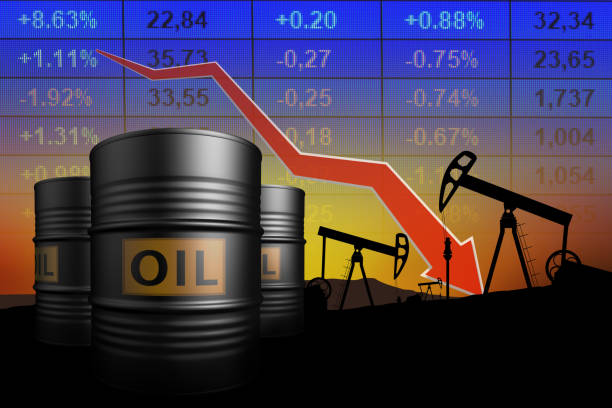
Crude prices have a direct effect on refined petroleum products’ prices and it has been hovering between $70 and $80 per barrel, which means the higher crude price, the higher petroleum products price and vice versa.


Admin
Admin
Previous Post

Nigeria’s IPO market on the bounce as more companies plan to list

Next Post

AfCFTA: LCCI pushes protection of industrial base

Next Post

AfCFTA: LCCI pushes protection of industrial base

  • Trending
  • Comments
  • Latest
Igbobi alumni raise over N1bn in one week as private capital fills education gap

Igbobi alumni raise over N1bn in one week as private capital fills education gap

February 11, 2026

Glo, Dangote, Airtel, 7 others prequalified to bid for 9Mobile acquisition

November 20, 2017

How UNESCO got it wrong in Africa

May 30, 2017

CBN to issue N1.5bn loan for youth led agric expansion in Plateau

July 29, 2025

6 MLB teams that could use upgrades at the trade deadline

Top NFL Draft picks react to their Madden NFL 16 ratings

Paul Pierce said there was ‘no way’ he could play for Lakers

Arian Foster agrees to buy books for a fan after he asked on Twitter

PalmPay marks International Women’s Day 2026 with ‘Purple Woman 3.0’ tech masterclass

PalmPay marks International Women’s Day 2026 with ‘Purple Woman 3.0’ tech masterclass

March 3, 2026
MDA reports expose Tinubu’s 3-year shambolic budgeting 

MDA reports expose Tinubu’s 3-year shambolic budgeting 

March 3, 2026
Nigeria secures $500m gas financing in fresh bid to unlock reserves

Gas supply uncertainty raises fresh risks for power investors

March 3, 2026
N5trn wasted: Nigeria’s production value bleeds as post-harvest losses deepen food crises 

N5trn wasted: Nigeria’s production value bleeds as post-harvest losses deepen food crises 

March 3, 2026

Popular News

  • Igbobi alumni raise over N1bn in one week as private capital fills education gap

    Igbobi alumni raise over N1bn in one week as private capital fills education gap

    0 shares
    Share 0 Tweet 0
  • Glo, Dangote, Airtel, 7 others prequalified to bid for 9Mobile acquisition

    0 shares
    Share 0 Tweet 0
  • How UNESCO got it wrong in Africa

    0 shares
    Share 0 Tweet 0
  • CBN to issue N1.5bn loan for youth led agric expansion in Plateau

    0 shares
    Share 0 Tweet 0
  • Google, global partners roll out new standard for AI-powered payments

    0 shares
    Share 0 Tweet 0
Currently Playing

CNN on Nigeria Aviation

CNN on Nigeria Aviation

Business AM TV

Edeme Kelikume Interview With Business AM TV

Business AM TV

Business A M 2021 Mutual Funds Outlook And Award Promo Video

Business AM TV

Recent News

PalmPay marks International Women’s Day 2026 with ‘Purple Woman 3.0’ tech masterclass

PalmPay marks International Women’s Day 2026 with ‘Purple Woman 3.0’ tech masterclass

March 3, 2026
MDA reports expose Tinubu’s 3-year shambolic budgeting 

MDA reports expose Tinubu’s 3-year shambolic budgeting 

March 3, 2026

Categories

  • Frontpage
  • Analyst Insight
  • Business AM TV
  • Comments
  • Commodities
  • Finance
  • Markets
  • Technology
  • The Business Traveller & Hospitality
  • World Business & Economy

Site Navigation

  • Home
  • About Us
  • Contact Us
  • Privacy & Policy
Business A.M

BusinessAMLive (businessamlive.com) is a leading online business news and information platform focused on providing timely, insightful and comprehensive coverage of economic, financial, and business developments in Nigeria, Africa and around the world.

© 2026 Business A.M

Welcome Back!

Login to your account below

Forgotten Password?

Retrieve your password

Please enter your username or email address to reset your password.

Log In
No Result
View All Result
  • Home
  • Technology
  • Finance
  • Comments
  • Companies
  • Commodities
  • About Us
  • Contact Us

© 2026 Business A.M