
BY OXFORD BUSINESS GROUP
As rising inflation and the global food crisis place financial pressure on many countries around the world, remittance flows to emerging markets are expected to continue to provide crucial support.
In a recently released report, the World Bank’s Global Knowledge Partnership on Migration and Development (KNOMAD) estimated that global remittances to low- and middle-income countries (LMICs) will grow by 4.2 percent this year to $630 billion.
The figure builds on 8.6 percent growth in 2021 and follows two years that have highlighted the value of these inflows to many emerging markets.
Indeed, despite projections from the World Bank in April 2020 that the outbreak of Covid-19 would lead to a 19.7 percent contraction in year-end remittance flows to LMICs, they instead held firm and actually increased by 0.8 percent in 2020.
These transfers took on greater importance as foreign direct investment (FDI) to LMICs fell by 13.5 percent in the same year.
In fact, remittances to LMICs in 2020 ($540 billion) surpassed the equivalent value of FDI ($259 billion) and overseas development assistance ($179 billion) combined.
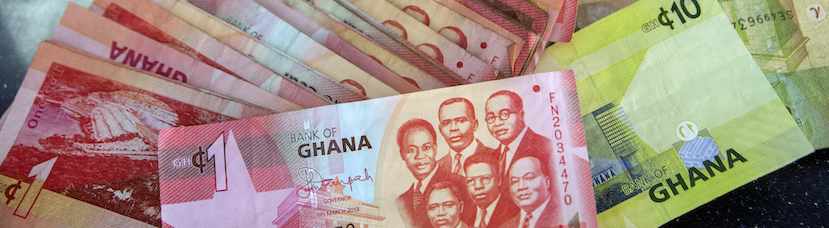
In many instances these inflows provided people with a source of replacement income as Covid-19 curfews or restrictions significantly curtailed the ability of many people to work and earn, particularly those in the informal sector.
Inflation and remittances
Just as remittances proved crucial during the pandemic, they are also likely to be vital this year following Russia’s invasion of Ukraine and broader economic headwinds.
Rising inflation and the increase in food prices, which reached all-time highs across March and April, have significantly increased the cost of living in many countries and placed strain on many households, especially in emerging markets.
A continued flow of remittances would therefore be a welcome contribution to many emerging market economies: the UN’s International Fund for Agricultural Development (IFAD) estimates that 800 million people globally benefit from remittances, which are often used to cover essential expenses such as groceries, medical care, school fees and housing.
Regional differences
While KNOMAD predicts that remittances will follow the upward trend of recent years, it nevertheless expects the growth rate to slow as inflation erodes wages and Russia’s invasion of Ukraine places significant pressure on certain economies.
There are also expected to be significant regional differences, much of which depends on the source country of the remittances and how those countries sending the remittances will be affected economically in 2022.
KNOMAD expects to see a 9.1 percent increase in remittances to Latin America and the Caribbean, followed by significant growth in flows to sub-Saharan Africa (7.1%), the Middle East and North Africa (6%), and South Asia (4.4%).
However, the report stated that remittances to Central Asian countries, for which the main source is Russia, are expected to fall dramatically amid the decline in the value of the rouble and sanctions on Russia.
Under the estimates, remittances to Kyrgyzstan are forecast to fall by 32 percent, while those to Tajikistan (-22%), Azerbaijan (-21%), Uzbekistan (-21%), Armenia (-19%) and Kazakhstan (-19%) are also expected to experience significant contractions.
Just as strong remittance flows are expected to provide support to many emerging markets, such declines could have economic repercussions for those in Central Asia.
World Bank figures show that remittances made up 31.3 percent of Kyrgyzstan’s GDP in 2020, compared to 26.7 percent in Tajikistan, 11.6 percent in Uzbekistan and 10.5 percent in Armenia.
Mobile and digital solutions gain traction
Another trend shaping the flow of remittances is the manner in which they are being sent.
While the overwhelming majority (97%) of inflows are paid in cash and transmitted via traditional brick-and-mortar banks and financial institutions, there has been a noticeable increase in fund transfers using alternative methods.
Lockdowns and border closures led to a 48 percent increase in mobile phone payments last year alone, while OBG has previously noted that a number of remittance-focused financial technology (fintech) start-ups have begun to gain traction in emerging markets.
This development comes as companies and international institutions look to reduce the cost of international transfers. IFAD says that currency conversions and fees account for an average of 6 percent of the total amount sent, double the 3 percent target laid out in the UN Sustainable Development Goals.
Initiatives such as the Remittance Community Task Force, launched by IFAD in March 2020, are pushing for far-reaching changes in policy and legislation on remittances, while some financial institutions have sought to cut or reduce fees.
For example, in October last year digital bank Revolut announced that US customers would be able to make 10 free international transfers a month. This was followed at the end of January with an announcement that customers would also be able to make 10 fee-free transfers to Mexico every month.







